
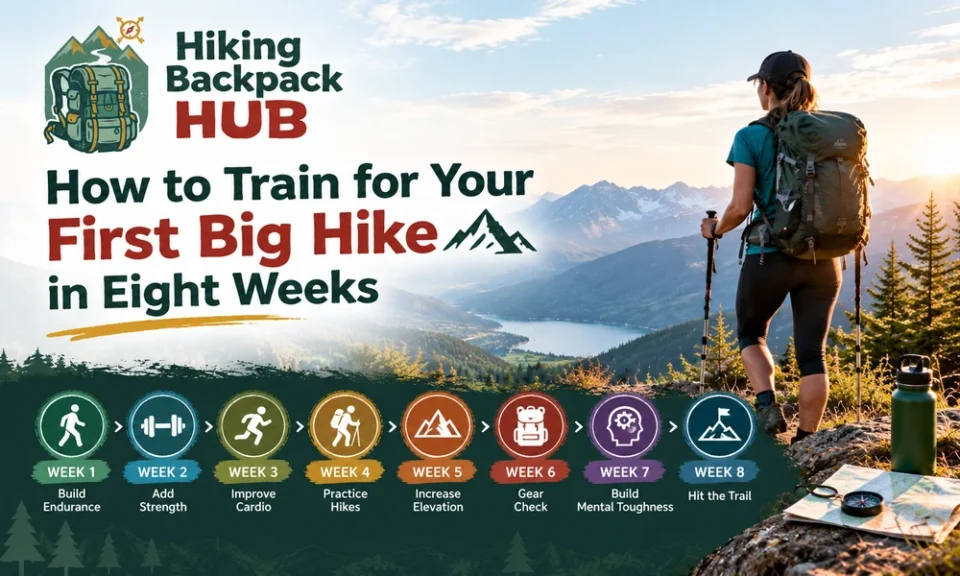
You do not need to be an athlete to finish a big hike, but you do need to prepare. The difference between a trip you enjoy and one you endure is usually whether your legs, feet and shoulders were ready for the specific work involved. Hiking with a loaded pack uses endurance, leg strength, balance and tolerance for time on your feet. Eight weeks is enough to build a solid base if you are starting from regular daily activity. If you have any health concerns, speak with your doctor before beginning a new training plan.
Know What You Are Training For
Before building a plan, look at the hike itself. How many miles per day? How much climbing? Will you carry a day pack or a full overnight load? A ten-mile day with two thousand feet of ascent is a very different test from a flat twelve miles. Write down the biggest day of your trip and treat that as your target.
This keeps your training specific. Hiking is mostly low-intensity effort sustained for hours, so the best preparation looks like long, steady sessions with some strength work, not occasional maximum efforts.
The Weekly Structure
A simple eight-week plan has four parts each week: one long hike, one or two shorter walks, one or two strength sessions and at least one full rest day. You can adapt the days to suit your schedule.
- Long hike (weekend): your main session, building gradually in distance and pack weight.
- Midweek walk: thirty to sixty minutes at a brisk pace, ideally with hills or stairs.
- Strength sessions: twenty to thirty minutes focused on legs, hips and core.
- Rest: real recovery, because adaptation happens when you rest.
Build the Long Hike Gradually
Start with a distance you can finish comfortably, even if it feels short. A common approach is to add around ten to fifteen percent to your long hike each week, then ease back in week four and week eight so your body can absorb the work. If your goal day is twelve miles, an eight-week build might run from four miles up to ten or eleven, with the last long session about two weeks before your trip.
Increase distance before weight. Once your long hikes feel steady, begin adding pack weight in small steps until you are carrying close to your trip load. Going from nothing to a full pack in a week is a reliable way to hurt your knees or back.
Strength Exercises That Transfer to the Trail
You do not need a gym. A few movements, done consistently, cover most of what hiking asks of you:
- Squats and step-ups: build the quads and glutes that power climbing. Use a sturdy step or bench and lower yourself with control.
- Lunges, forward and reverse: strengthen single-leg stability, which matters on uneven ground.
- Calf raises: support your lower legs and feet through long days and steep descents.
- Planks and side planks: give your core the endurance to carry a pack without slumping.
- Glute bridges: reinforce the hips and help protect your lower back.
Start with two or three sets of ten to twelve reps and add resistance or reps gradually. Quality matters more than load, so keep your knees tracking over your toes and your movements smooth.
Train Downhill, Too
Descents are where many first-timers feel the pain. Going downhill makes your quads work to brake your body, which causes the deep soreness that arrives the next day. Include stairs or a gentle downhill section in your training so your legs get used to it. Shortening your stride and using trekking poles can reduce the load on your knees.
Break In Your Gear Early
Training walks are the ideal time to test everything you plan to use. Wear your boots or trail shoes with the socks you will take on the trip, and try them on long outings so any rubbing shows up while you can still fix it. Carry the pack you intend to use, loaded properly, and learn how it adjusts. Fit makes an enormous difference to how a pack feels after hours on the trail, and the buying guides at Hiking Backpack Hub explain how to measure your torso and choose a size that suits you.
Practise Eating, Drinking and Pacing
Endurance is partly physical and partly logistical. Use your long hikes to practise sipping water often, snacking every hour and finding a pace that feels sustainable. Notice which foods sit well and which make you feel sluggish. By the end of your plan, your fuelling routine should be automatic.
Sample Eight-Week Outline
This is a template, not a prescription. Adjust it to your current fitness.
- Weeks 1-2: long hike of 3-5 miles, light day pack; two short walks; two short strength sessions.
- Weeks 3-4: long hike of 5-7 miles; begin adding modest pack weight; add hills to midweek walks. Reduce volume slightly in week four.
- Weeks 5-6: long hike of 7-10 miles with closer-to-trip pack weight; keep strength work steady.
- Week 7: your biggest long hike, roughly matching your hardest planned day.
- Week 8: taper. Shorter, easier outings so you arrive fresh, plus final gear checks.
Listen to Your Body
Muscle fatigue is normal. Sharp or persistent pain is not. If something hurts in a way that feels different from ordinary tiredness, back off and rest, and consider getting it assessed. Missing a session is far better than pushing through an injury that ends your plan. Sleep, hydration and regular meals all contribute to recovery, so treat them as part of the programme.
Keep the Motivation
Training is easier with company or a reason to look forward to it. Invite a friend on your long hikes, pick scenic routes and log your progress so you can see the improvement. Within a few weeks you will notice stairs feeling easier and your recovery getting faster, which is a real confidence boost before a big trip.
Your Next Step
Consistency beats intensity. A modest plan you complete will always do more than an ambitious one you abandon in week three. If you want structured ideas to follow, the hiking training resources offer plans and exercise guidance for different fitness levels, which makes it easier to pick a schedule that fits your life. Lace up, start with a manageable walk this weekend and let the next eight weeks do the rest.
About the author: Dana Okoro writes about trail preparation and backpacking at Hiking Backpack Hub. Read more of their work on the author page.
